An objective stare into the unsettling truth, through a powerful lens provided by the past, might be the single greatest weapon to be afforded. Mankind may avoid its further subjugation by learning the harsh lessons history has provided, and it may cling to its autonomy for another day.
A significant majority of those living in the United States today are still technically considered free citizens, but the terrifying reality of our brutal enslavement and that of all future generations is rapidly approaching at hand. We are constantly manipulated and meticulously maneuvered daily by elaborate acts of distracting political theater and a thoroughly compromised, so-called free press that serves hidden agendas.
Both of these insidious institutions pretend to offer us a choice but provide neither. Most of our ideological and civil dilemmas are mere charades that have been “acted out” before but proceed without detection.
The haunting historical example of pre-Soviet Russia, characterized by its extravagantly powerful and deeply entrenched European nobility alongside its frightening, catastrophic descent into a vicious communist killing field, should still resonate profoundly with modern society. The complex cast of historical actors and their underlying motivations, the impossible predicaments they faced, the fateful choices they ultimately made, and the tragic, inevitable conclusions that followed are remarkably similar to the turbulent socio-political dynamics defining our world today.
The Tsardom of Muscovy
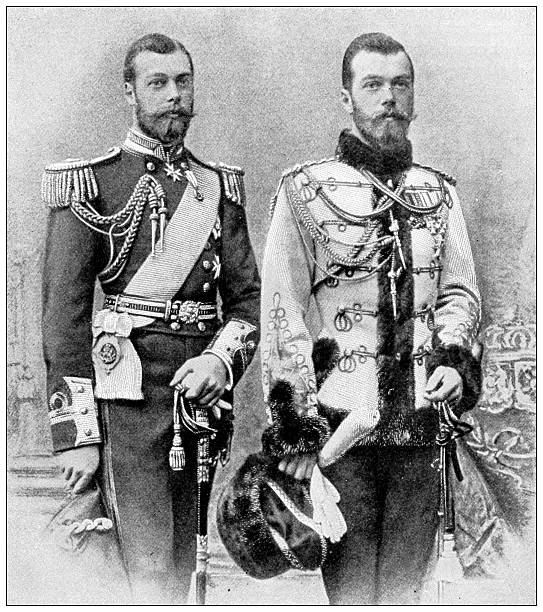
The Tsardom of Muscovy, which served as the foundational and first true version of a centralized Russian state, was officially established in the momentous year of 1547 and was subsequently ruled by the formidable and infamous Tsar Ivan Vasilyevich, widely known throughout history as Ivan the Terrible. Decades of transformation, political shifting, and dynamic leadership followed this turbulent era until, in the pivotal year of 1689, the ambitious and visionary Peter the Great firmly seized indisputable political and military authority over the entire tsardom. His relentless pursuit of modernization and territorial expansion ultimately culminated in 1721 when, following a decisive and hard-fought victory over the Swedish Empire in the Great Northern War, he officially proclaimed the nation to be the vast and powerful Russian Empire.
Imperial Russia
The Russian Empire, prior to the tumultuous and transformative events of 1917, was a rapidly expanding and deeply pious Christian realm governed by powerful royal dynasties, the last, most illustrious, and undoubtedly most famous of which was the legendary Romanov family. Throughout this fascinating historical age, the vast majority of prominent European nations were traditionally ruled by some form of hereditary nobility or monarchical authority. The incredible potential and boundless possibilities for the exceptionally vast and remarkably fruitful Russian state seemed practically limitless as it proudly stood shoulder to shoulder, successfully rivaling the very best achievements of any other major European empire on the global stage.
A few chinks in his armor appeared for Nicholas with Russia’s entry into World War One, after Germany declared war on its neighboring empire. Russia suffered massive casualties, over seven million in all and this drew much resentment from its civilians. Tsar Nicholas II had declared command over the military during this time, so he began to take the blame for this military disaster as well as any subsequent one.
The Bolsheviks and the Enemy Within
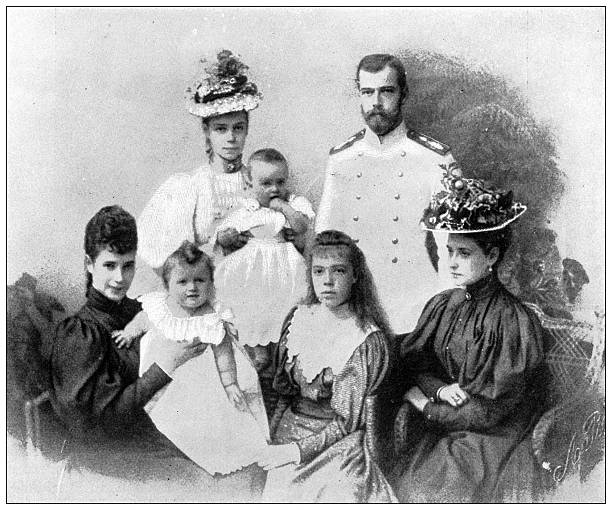
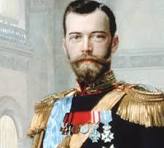
In stark contrast to the maniacal characters that would give rise to the Soviet Union, Tsar Nicholas II was a cultured leader with Western sensibilities. Nicholas was certainly saddled with his fair share of foibles, but at the root he was a devoted family man and a proud countryman. Also, unlike his autocratic and treacherous successors, Nicholas, if given the choice, would never have assumed the throne.
In the years leading up to the Russian Empire’s bloody demise, the state had been infiltrated by an anti-Russian agency of miscreants sowing the seeds of disillusion. They deceptively claimed to be revolutionaries fighting for the toiling and underrepresented working class and its autonomy from the elitist bourgeoisie.
The daring revolutionists aggressively offered complete independence from the supposedly tyrannical Tsar and passionately promised immediate “peace, land, and bread,” which were desperately longed for by the vast majority of the war-weary citizenry of that chaotic historical time across the entire continent of Europe.
Merchants of death known as Bolsheviks would eventually consume the fragile Russian Empire and then excrete its bleak replacement state, the Soviet Union.
The Bolsheviks were fundamentally unconcerned about the severe plight of their fellow Russians, a harsh reality that would soon become strikingly evident in their ruthless and calculated treatment of the deposed Tsar Nicholas II and his innocent family. Throughout this turbulent historical period, the revolutionary leadership prioritized their own strict ideological objectives and the absolute consolidation of political power over any genuine empathy or basic human compassion for the suffering populace they claimed to liberate.
The haunting execution of the Romanovs
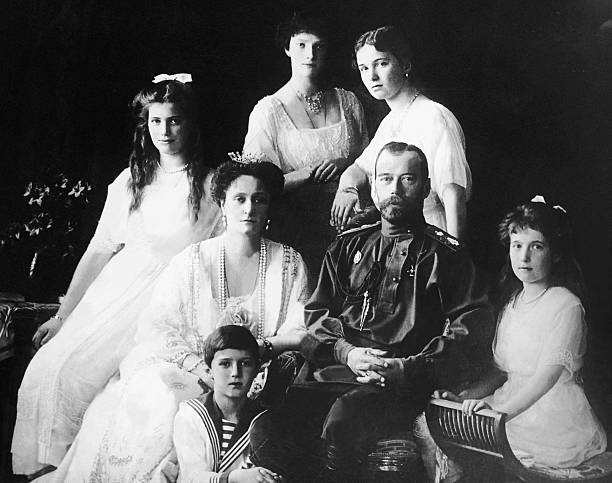
On July 16th, 1918, following imprisonment and humiliating treatment, Nicholas and his family were ordered to dress quickly and convene in the cellar for a portrait. Nicholas, Alexandria, and their five children, Olga, Tatiana, Maria, Anastasia, and Alexei, along with the servants, huddled closely to be photographed.
At that moment, Nicholas was informed of the execution, and seconds later, a group of cowardly Bolshevik assassins proceeded to unload hot lead into the whimpering and cornered family. Nicholas’s last words were “What, What?”, and soon all but the Tsar, who received a blast through the skull, lay dying amidst the thick air of gun smoke.
The children and Alexandria, who were badly injured but still alive, endured another 20 minutes of bayonets and rifle butts until their mangled bodies stopped moving. Alexei Romanov, who was only 13 at the time and a hemophiliac, had suffered a most agonizing and gruesome demise.
After the frenzied and chaotic execution, the Romanov corpses would suffer a last humiliation by being subjected to postmortem abuse, stripped of jewelry and clothes, and then doused in acid.
The Soviet Union
Once Lenin was the unequivocal authority of the Soviet Union, the real sadistic mayhem was unleashed, making the revolutions’ mass casualties look inconsequential. The Russian people were promised equality, fairness, and a stake in the state; instead, they received unimaginable terror and subjugation.
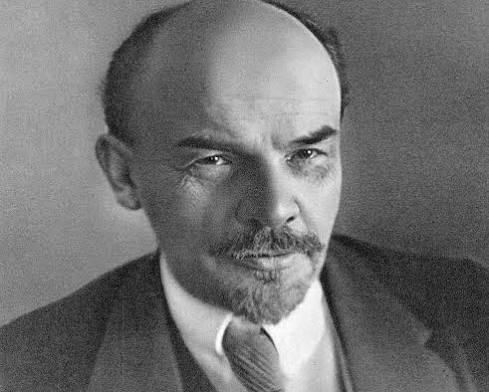
Vladimir Lenin died on January 21, 1924, leaving Joseph Stalin as the explicit authority over the vast, Godless, slave-state known as the Soviet Union.
Land of the Dead and the Dying
Ukraine, which was in the Soviet Union then, would not be immune to immutable horrors, deemed necessary by Stalin and the Bolsheviks. In his initial “stab” at establishing the wholesome tenets of communism, Stalin would impose “collectivism,” which replaced individually owned and operated farms with big state-run collectives.
Many of the Ukrainian farming serfs resisted this wholesale seizure of their land and their main source of sustenance.
Holodomor
The term “Holodomor” refers to the period, primarily 1932-1933, when Stalin’s collectivist policies and their dire effects came to a head, causing a man-made famine in Ukraine.
holodomorct.org
1932-1933
Although starvation is already widely reported by officials to their superiors (but never in the press), the Soviet government sharply increases Ukraine’s production quotas, impossible to meet by a weakened and famished population.
Stalin observes in the summer of 1932 to his right hand commander, Lazar Kaganovich that “we may lose Ukraine,” and proceeds to implement a number of laws to punish the farmers and threaten the collective farm managers. A law goes into effect that calls for the arrest or execution of any person – even a child — found taking as little as a few stalks of wheat or any possible food item from the fields where they worked. Travel voucher systems are implemented that forbid people from rural areas taking a train to the cities. In mid-winter, the borders are closed to residents of Ukraine, with armed guards forcing residents to return to their starving villages. Entire Ukrainian villages are “blacklisted,” a law that prohibits the transport of food and other necessities such as fuel or soap into the villages and the hungry from leaving in search of food. Brigades of young activists are brought in to sweep through the villages and confiscate hidden grain, and eventually any and all food from the farmers’ homes.
Stalin once stated that “the national question is in essence a rural question” Now he and his commanders determine to “teach a lesson through famine” and ultimately, to deal a “crushing blow” to the backbone of Ukraine, its rural population. At the same time, he repeatedly lays blame on outside saboteurs, kurkul influence, and weak collective farm management. Thousands of low level, local communist managers are arrested for not squeezing more out their collective farmers.
1933
By June, at the height of the famine, people in Ukraine are dying at the rate of 28,000 a day, nearly a third of them are children under 10. Between 1932-34, approximately 4 million deaths are attributed to starvation within the borders of Soviet Ukraine. Stalin denies to the world that there is any famine in Ukraine, and continues to export millions of tons of grain, more than enough to have saved every starving man, woman and child. -holdomorct.org
In conclusion
The death toll and scope of Stalin’s genocidal actions far and away dwarf anything Hitler is accused of fomenting, yet we still chose to ally ourselves with the Stalin regime. The entire premise behind our heavy-handed invasion of Germany was to rebuke a psychotic despot and prevent a genocide.
To this day, an immutable narrative has been applied to the Second World War and what led to it. If you challenge this, then you run the risk of being labeled as an antisemite or white supremacist. Why are there certain issues or accounts in this country that you’re not allowed to question?