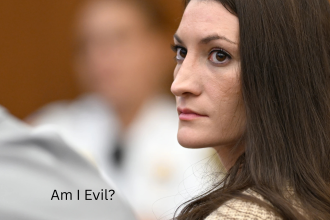


I knew something was seriously wrong when I saw the internet absolutely buzzing with a swarm of women who were not just supporting Lindsay Clancy, but were also eagerly rattling off an array of outlandish and far-fetched excuses on her behalf. These women seemed determined to shift the blame onto the pharmacy, the broken system, and even her husband, all in an attempt to completely absolve Lindsay of any responsibility for the horrific act of choking the lives out of her three innocent babies.
Women are expressing solidarity with a convicted murderer, asserting that the tragic situation could have happened to any one of them. In numerous instances, these women are mothers themselves, yet they show little interest in discussing the children who lost their lives. The focus remains entirely on Clancy—how she endured her hardships while living in relative luxury, being married to a caring husband, and even having the assistance of a nanny to help care for her children.
Her supporters are excusing her behavior by attributing it to postpartum depression. However, what about the half a million women each year who experience the same condition but do not go on to harm their children in any way? The women standing outside the courtroom, cheering and celebrating, while three innocent lives have been tragically taken, truly create a negative impression and give women as a whole a very bad reputation.
Perhaps there is a deeper reason why, for the vast majority of human history until just a short time ago, women were consistently treated as legal minors who lacked the fundamental rights to make crucial life decisions. For example, they were not permitted to choose their own husbands or to own property such as land independently. Moreover, women were denied the legal right to vote until the year 1920, and it was only in the late 19th century that they began to gain the ability to hold public office. This long history of legal and social restrictions reflects complex societal attitudes toward gender roles that have only recently begun to change.
In the past, children were considered the legal property of their fathers, with fathers holding full authority over them. Women, on the other hand, were very seldom granted the legal right to initiate divorce or dissolve a marriage. This practice was not only widespread and customary in Western societies but was also commonly observed throughout the Middle East and many parts of Asia. Even today, some Muslim-majority countries continue to maintain strict controls over their women, often limiting their freedoms and rights in various aspects of life.
What did our ancestors know about women that seems to escape us today?

Unfortunately, many women have developed a sense of self-entitlement and impatience, often positioning themselves as victims who are unwilling to accept or take any form of accountability for their actions. They may strike with the force typically associated with men and operate under the belief that no one would have the courage or audacity to respond in kind. A clear illustration of this troubling trend can be seen in the widespread phenomenon known as the “Karen,” which highlights just how far some women have drifted from traditional values and responsibilities. These women often desire to enjoy everything that a man possesses, including privileges and advantages, without being willing to put in the necessary effort or fulfill the obligations required to genuinely earn and maintain those benefits.
The Lindsay Clancy case has truly brought to light the reality that many middle-class women often behave like needy adolescents, revealing a lack of maturity in handling their emotions and decisions. These women frequently exhibit little to no impulse control and are overwhelmingly driven by their emotions rather than rational thought. Given this context, it is not surprising that women now initiate approximately 70 percent of all divorces in America. This statistic highlights the tendency of many women to prioritize external factors over their own families, placing importance on things outside of themselves instead of nurturing and preserving familial bonds.
Women cannot have their cake and eat it too; they cannot behave like men and at the same time expect to receive the kind of treatment traditionally reserved for women. If they desire to enjoy all the privileges and considerations afforded to women and be regarded as such, then they must conform to the behaviors and roles typically associated with women. For example, women are exempt from the military draft, yet they still have the right to vote on crucial decisions, including those about going to war.
Today, women hold the majority of jobs and college degrees, outnumbering men in many professional fields. They often earn more money than men on average and tend to have significantly lower rates of drug addiction and suicide. In modern society, women have arguably never been doing so well, while men have faced greater challenges and difficulties than before. Despite these positive advancements for women, many still feel oppressed and believe they are owed more rights and opportunities.
The reason why women are loved, deeply appreciated, and often protected by men is precisely because they are not men and, importantly, should not be expected to act like men. It is worth remembering that it was not too long ago in history that society even debated whether women possessed a soul or not, reflecting the deep-seated biases and misunderstandings that existed. In the case of Lindsay Clancy, we can clearly see why such arguments were raised in the first place, as it brings to light the complex dynamics and perceptions surrounding women.
What are “Karens”?